Temporary text share: how long a shared text should stay online
2026-10-16
This post contains affiliate links. As an Amazon Associate, ZAGO.TO earns from qualifying purchases.
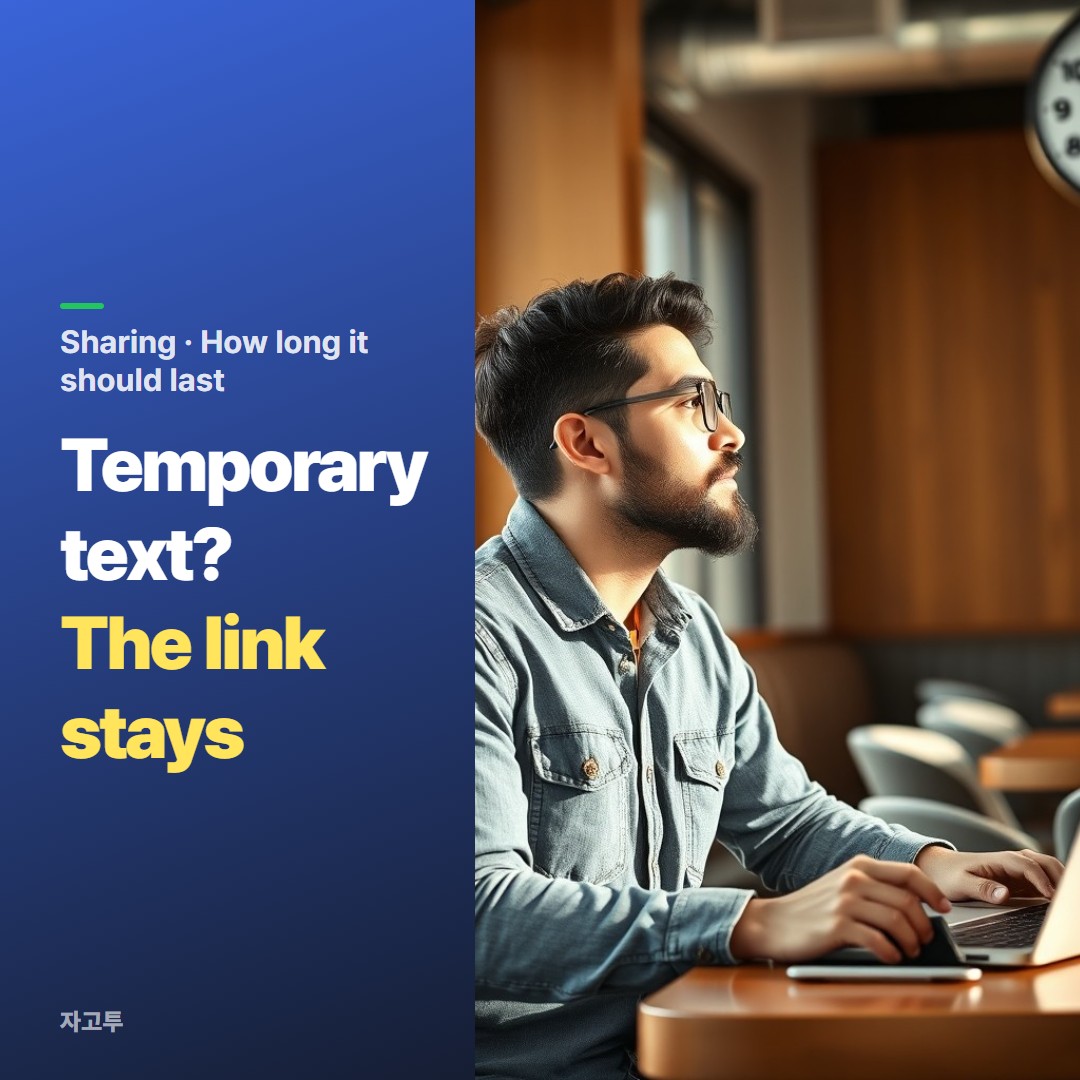
A temporary text share is only as temporary as its shortest copy. The timer on the site matters less than where the link travels on its way to the other person.
Most people pick a temporary text share for one reason. They want to send something once, and they do not want it sitting on a server next month.
The expiry menu is where the choice seems to happen. In practice, three other things decide how long your text really stays around.
What the expiry menu really offers
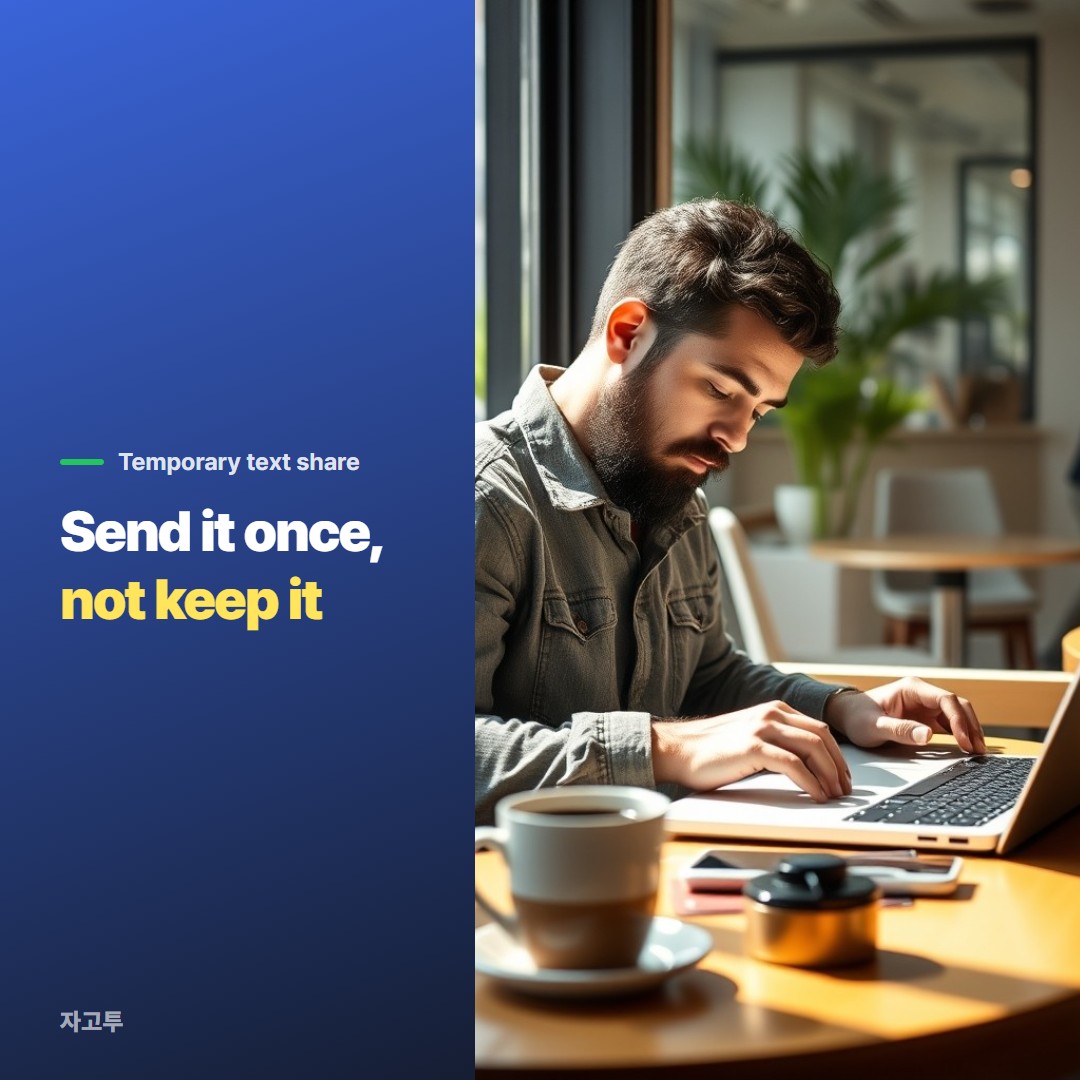
▲ The expiry setting is the obvious part of the choice
Pastebin lets you pick an expiry from minutes to never, and offers a "burn after read" option on top of that.
PrivateBin and similar open-source tools do the same, and add something important: the text is locked with a key inside your browser before upload, so the server stores a version it cannot read.
On that point, they protect more than we do.
Online notepads usually keep a page until someone deletes it. They are made for editing together, not for vanishing.
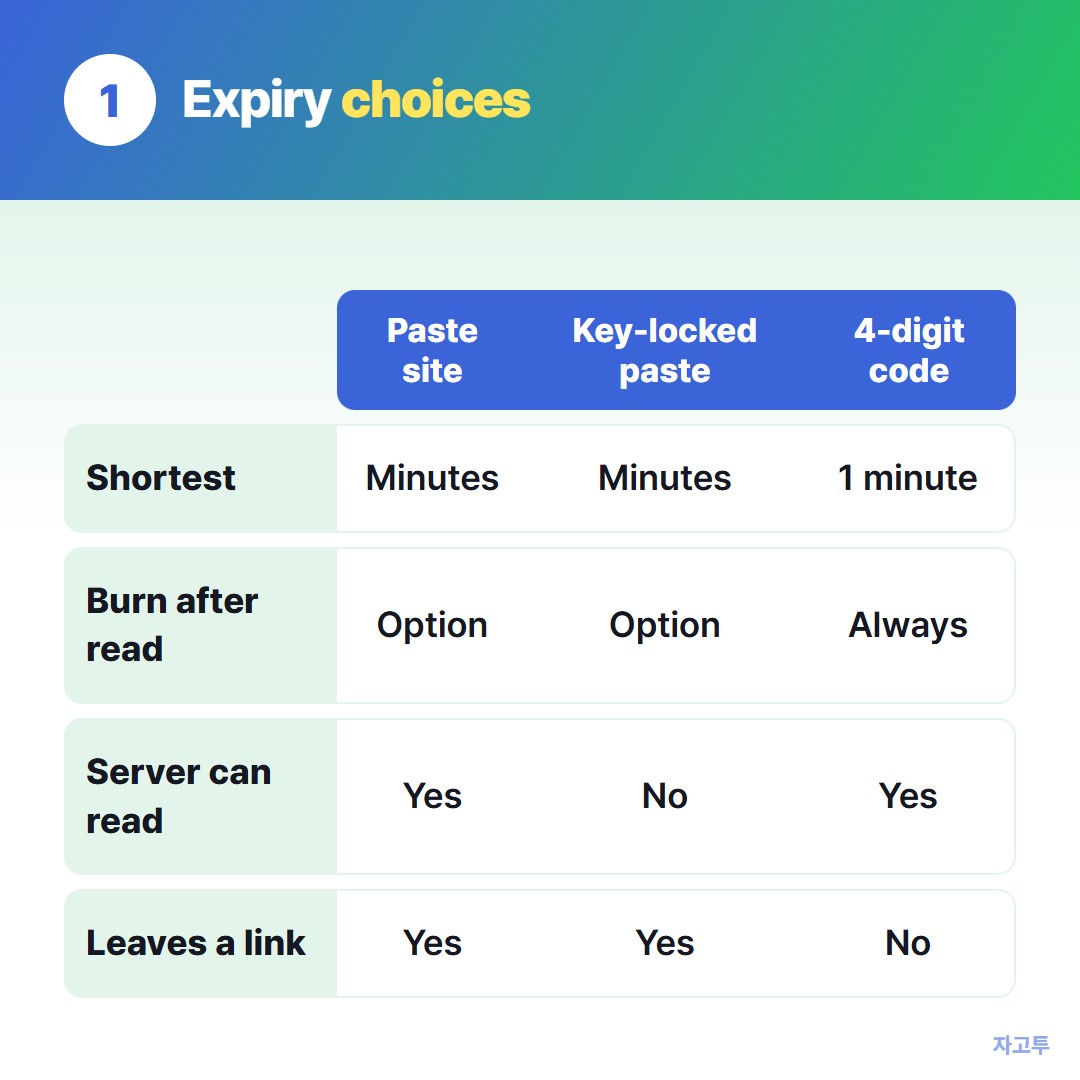
▲ Longer is not wrong, it is just a different job
Where the text lives after you send the link
The page expires. The link does not. It sits in the chat, email or note you used to pass it on.
That is harmless once the page is gone. But if the expiry is a week, the link in your chat history opens the text for a week, for anyone who scrolls back on any device signed in to that chat.
Some chat apps also fetch a link to build a preview card. On some services, that automatic fetch can count as the one allowed read, so the real person gets "not found".
How long should a temporary text share last?
Work backwards from the reader.
- They are next to you: a minute or two is plenty.
- They are on a call with you: a few minutes, while you wait.
- They will read it tonight: hours, and accept that the link sits in the chat until then.
- They need it next week: that is something to keep, not a temporary text share. Use a note or a document.
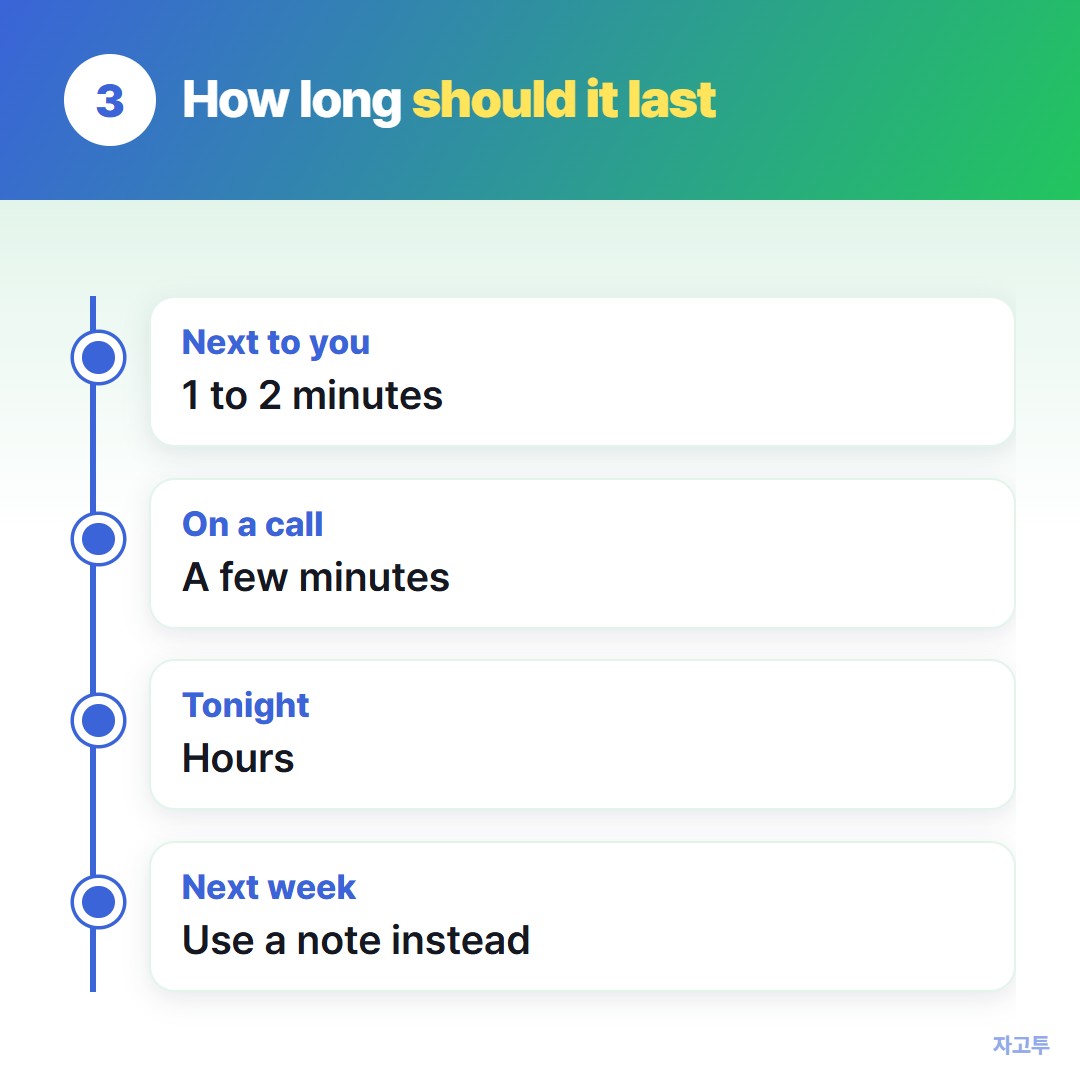
▲ The smallest window you can live with
A code instead of a link
ZAGO.TO takes a different route for the first two cases. You paste the text and get a 4-digit code. The other person types the code on zago.to and the text appears.
There is no link to leave behind in a chat, and a code is easy to read aloud across a desk or over the phone.
The window is fixed and short. Unopened text is deleted after 1 minute, opened text 1 minute after opening, and it cannot be opened again.
Deleted codes are not reused for 5 minutes. The reasons for that one minute are in why one minute.
The cost is real. If the reader is slow, the text is gone and you send it again.
ZAGO.TO has no in-browser encryption yet, so the server can read what you paste. It moves text only, up to 10,000 characters, never files.
Questions people ask
Is burn after reading the same as a short expiry? No. Burn after reading deletes on the first open, whenever that is. A short expiry deletes at a time, opened or not. The safest setups use both.
Which one is best for code snippets? For keeping or sharing publicly, a paste site with a long expiry. For a quick move between your own machines, see paste code online between machines.
Should I put a password in a temporary text share? Only in a tool that locks the text in your browser before upload, and even then a password manager's sharing feature is the better fit.